ReSound Sensia
.png)

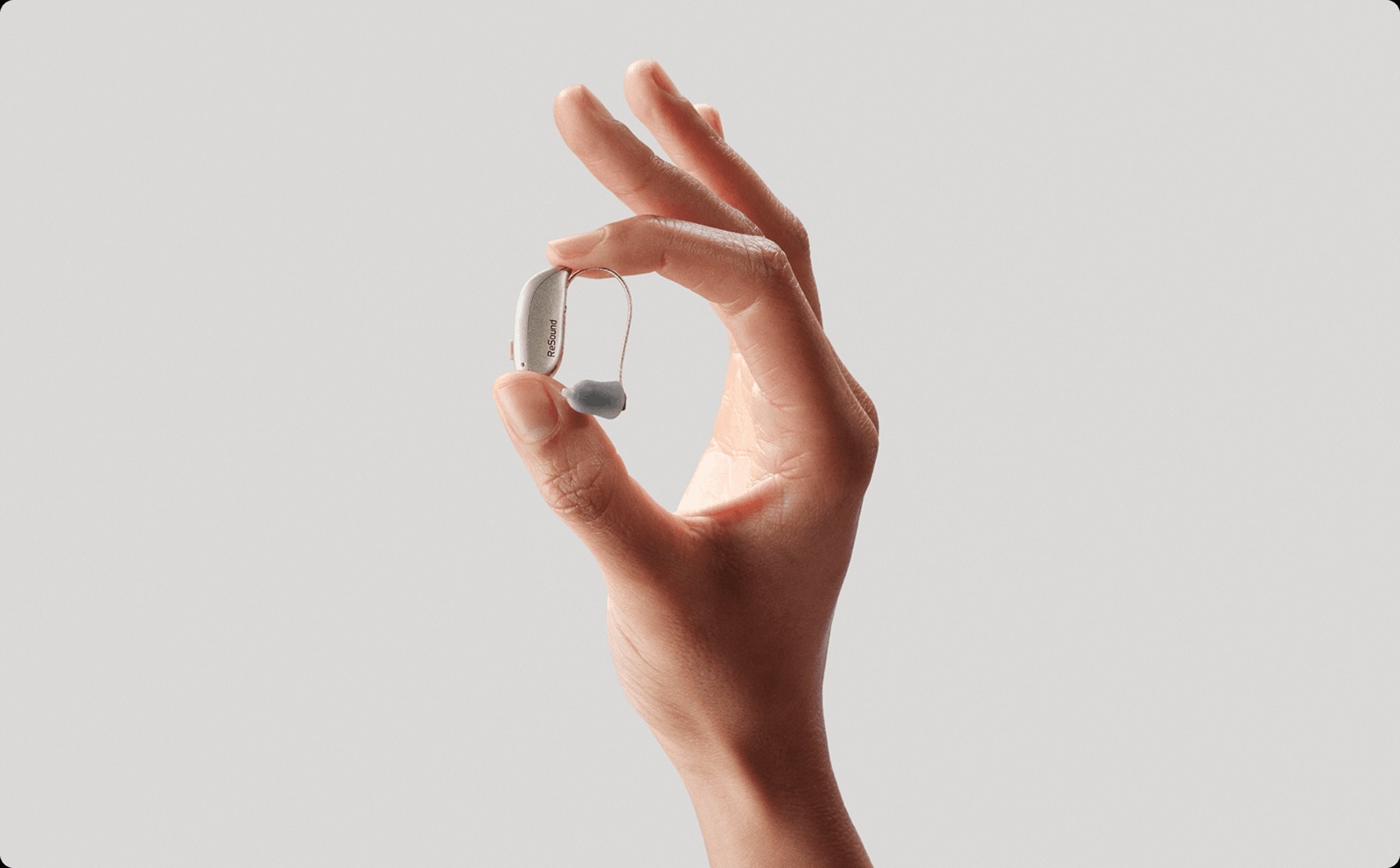
The newest AI hearing aids are good at separating speech from noise, but they can lock onto the loudest voice instead of the one you want. The ReSound Sensia was built to fix that, automatically.
How ReSound Sensia Works
ReSound Sensia is a premium hearing aid family from GN, built around an automatic system called Intelligent All-Around. Three technologies work together in real time: AcoustIQ reads the environment and decides which features to use, a four-microphone beamformer favors the voice in the direction you are facing, and deep neural network (DNN) denoising quiets competing speech and noise around that talker. As ReSound puts it, the aim is to bring forward the conversation you are trying to follow rather than simply amplifying whatever is loudest.
The key advance over the previous ReSound Vivia is that this processing is now automatic. At the premium Sensia 9 level, the hearing aid recognizes a noisy speech situation on its own and combines the beamformer with DNN denoising, so you no longer have to select a special program on the device or in the app. It does this while keeping a very small size and all-day battery life. Live Better Hearing + Balance is pleased to offer ReSound Sensia among the hearing aids we fit from all major manufacturers.
Key Features of ReSound Sensia
- Intelligent All-Around: The automatic system that senses your surroundings and engages the right features without any manual switching on your part.
- Four-Microphone Beamformer: Focus on a person simply by facing them. ReSound reports that end users preferred it 93% of the time in its testing.
- Automatic DNN Denoising: Reduces competing voices and background noise around the talker you are facing, with its audibility benefit validated by the independent Hörzentrum Oldenburg research center in Germany.
- Connectivity: Supports the latest Bluetooth LE Audio for streaming, plus Auracast, which sends audio straight to your hearing aids in equipped venues such as theaters and airports.
- Small, Durable, and Many Styles: Available in what ReSound calls the world's smallest AI receiver-in-ear model, plus custom in-the-ear styles, a CROS option for single-sided hearing, and bimodal models for people who use a Cochlear Nucleus implant. Every model is IP68-rated against moisture and dust.
Is the ReSound Sensia Right for You?
Sensia is worth considering if you want a premium device, your hardest listening happens in noisy group settings, and you prefer a hearing aid that adjusts on its own rather than one you manage through programs and apps. Its performance figures come from ReSound and GN-sponsored research, and independent reviewers have not yet formally tested Sensia, so we treat those claims as encouraging but still to be confirmed, above all in how the device performs for you. That is one reason we verify hearing aid fittings with Real Ear Measurement to confirm the sound reaching your eardrum matches your prescription, then fine-tune it over follow-up visits for the situations where hearing has been hardest.
Speak With Our Team
Live Better Hearing + Balance has convenient locations across Maryland, Virginia, Pennsylvania, and New Jersey. Contact the office nearest you to schedule a consultation, and we will walk you through how ReSound Sensia compares with the other devices we fit and help you decide what makes sense for your hearing, your lifestyle, and your budget.
Common questions
How do I know which hearing aid is right for me?

The best hearing aid for you depends on various factors including your level of hearing loss, lifestyle, and budget. It's essential to consult with a hearing care professional who can assess your hearing and recommend options tailored to your needs.
Are hearing aids difficult to use?
Modern hearing aids are designed to be user-friendly with automatic features and simple controls. Many also come with connectivity options that allow for easy adjustments via smartphones or other devices.
What is the expected lifespan of a hearing aid?
The average lifespan of a hearing aid is about 5 to 7 years. Proper care and maintenance can extend the life of your hearing aid.
What factors should I consider when choosing a hearing aid?
Important factors include the type and severity of hearing loss, comfort, ease of handling, available features such as wireless connectivity, the hearing aid's appearance, and of course, the cost. A hearing care professional can help you balance these factors with your personal needs and preferences.
Peace of mind
Our Peace of Mind Coverage plans provide patients with an easy way to manage their hearing healthcare at Live Better Hearing. Hearing aids are both a financial and time investment, and annual service plans help to protect your investment.