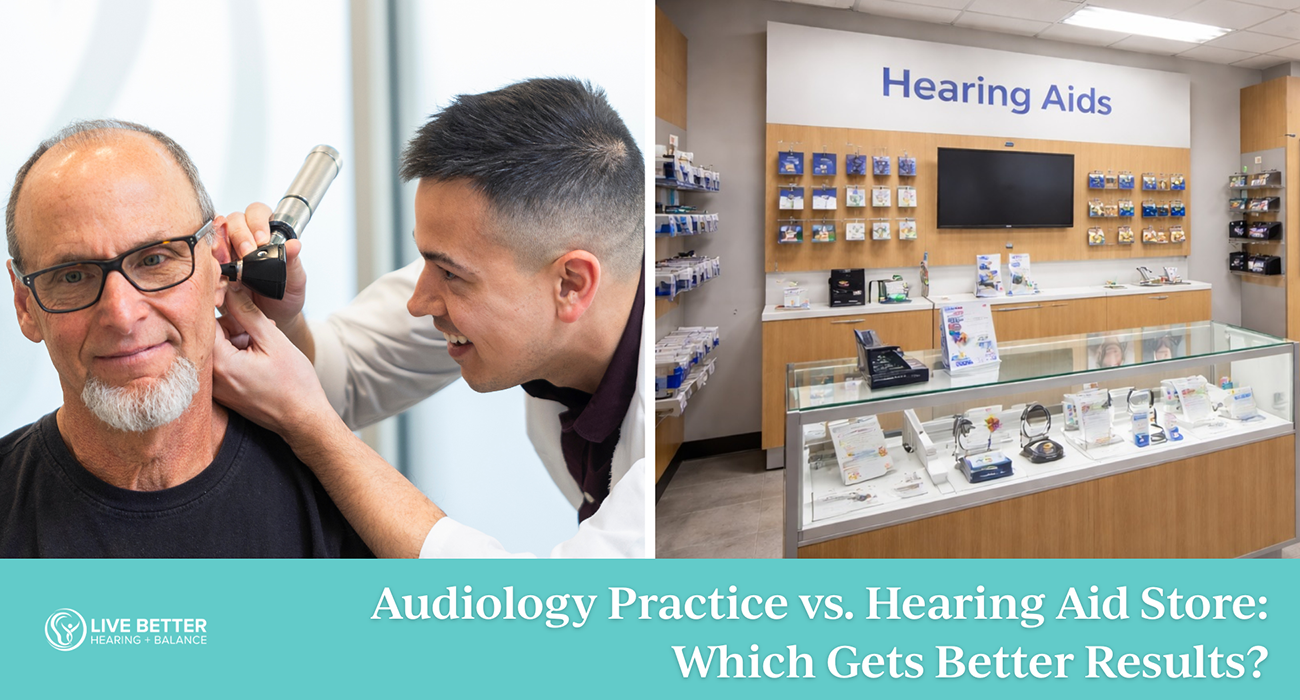
Short answer: If you're experiencing hearing loss, the real question isn't where to buy a hearing aid cheapest; it's where you'll receive comprehensive hearing healthcare that leads to the best outcomes. Hearing aid stores and retailers like Costco focus on selling devices. Audiologists focus on diagnosing, treating, and managing hearing loss over time, which is why patients who receive comprehensive audiology care typically achieve better long-term results.
When I sit with patients in my office, many of them already have hearing aids. What they’re frustrated by isn’t the device, it’s that they still can’t hear clearly in restaurants, family gatherings, or meetings. In almost every case, the issue isn’t motivation or effort; it’s the level of care they received along the way.
That’s because, over the last decade, hearing care has become more visible and more confusing at the same time. Big-box retailers, online companies, and hearing aid chains advertise convenience and lower prices, while audiology practices are often perceived as more medical and, sometimes, more expensive.
So it’s understandable for our patients to wonder:
It’s a fair question. Hearing aid stores are everywhere. They’re convenient. They often advertise lower prices. And for someone just starting to notice hearing difficulty, it can feel like the simplest place to begin.
But after years of caring for patients, I’ve learned that where people start isn’t nearly as important as where they end up. And many of the patients I see come to us after struggling with hearing aids they purchased elsewhere.
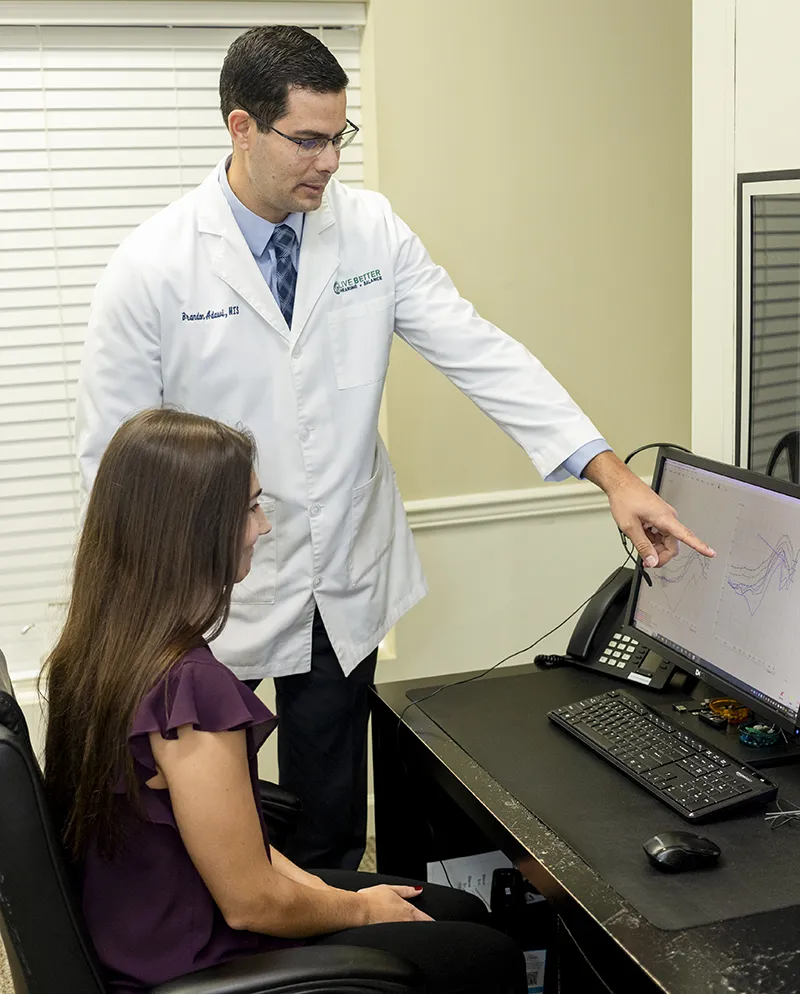
Audiologists are doctoral-trained healthcare providers who specialize in hearing, balance, and related disorders. Our role extends well beyond fitting hearing aids.
At Live Better Hearing + Balance, comprehensive audiology care typically includes:
I often tell patients that hearing loss rarely exists in isolation. It intersects with cognition, balance, communication, and overall quality of life. That’s why proper diagnosis and clinical oversight matter. This broader expertise matters, even if hearing aids are the initial reason for a visit to our office.
At Live Better Hearing + Balance, a meaningful percentage of our new patients come to us after purchasing hearing aids from retail stores or online—most commonly from Costco, Sam's Club, big-box retailers, and direct-to-consumer brands.
They're not starting over because the devices are defective. They're seeking help because they didn't receive comprehensive diagnostic care or evidence-based fitting in the first place.
Audiologists perform full diagnostic hearing evaluations, not just quick screenings. This includes testing that helps determine:
These details directly influence treatment decisions.
Some hearing or balance symptoms require further medical evaluation. Audiologists are trained to recognize when hearing loss may be related to conditions that warrant referral to ENTs, neurologists, or other specialists.
Best-practice audiology care includes Real-Ear Measurement, a verification process that measures how sound is delivered inside your ear canal. This ensures hearing aids are programmed accurately for your unique anatomy.
Many retail settings skip this step entirely.
Professional audiology organizations—including the American Academy of Audiology (AAA), American Speech-Language-Hearing Association (ASHA), and Academy of Doctors of Audiology (ADA)—recommend specific protocols for hearing aid fitting:
These practices are standard in audiology clinics but uncommon in retail hearing aid settings.
Many of the clinicians at Live Better Hearing + Balance are part of Dr. Cliff Olsen’s HearingUp network, which recognizes providers nationwide who follow audiology best practices and the highest standards of hearing health care.
Hearing is not instant or perfect even after a patient is initially fit with a hearing device. Audiologists spend time counseling patients on:
This guidance often determines whether someone succeeds or gives up.
Hearing typically changes over time. Audiologists provide long-term follow-up, fine-tuning, and support to ensure hearing aids continue to work well as life changes.
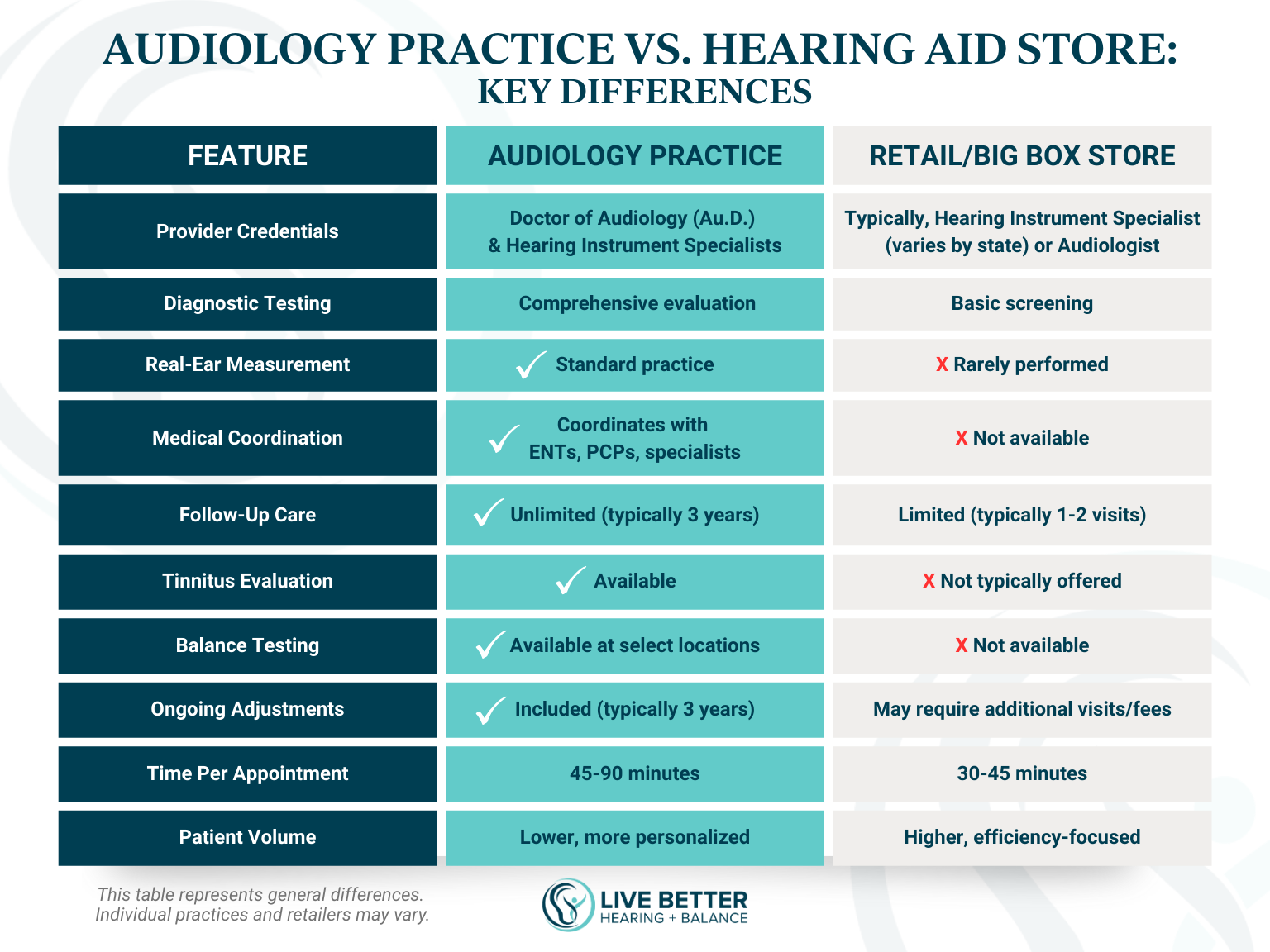
To help you understand the key differences, here's a detailed comparison:
A hearing aid is a piece of technology. Hearing care is a medical service.
In our practice, many patients arrive frustrated because hearing aids they purchased at Costco, Sam's Club, or other retail locations don't perform the way they expected. They tell me they still struggle in restaurants, miss parts of conversations, or feel fatigued from listening all day.
Common issues include:
When we dig deeper, the issue often isn’t the device itself. It’s what came before and what came after:
Without addressing those factors, even advanced technology can fall short.
Another hesitation I hear frequently is concern about cost or feeling pressured to buy.
Some people worry that seeing an audiologist will automatically be more expensive, or that the visit will turn into a sales pitch. I understand that skepticism.
Hearing aid prices at audiology practices may appear higher at first glance, but the comparison often overlooks what’s included. Audiology care typically bundles:
At our practice, most hearing aids typically include long-term comprehensive hearing care included in the initial purchase, including consistent device care, unlimited office visits, ongoing adjustments, batteries (if needed), and future discounts on newer technologies. Over the life of the devices, this ends up being a far greater value for our patients.
While upfront pricing varies, here's what's typically included at each level of care:
Retail/Big-Box Stores (e.g., Costco): $1,400-2,000 per pair
Audiology Practice: $2,500-6,000 per pair
The question isn't just upfront cost—it's total value, long-term outcomes, and whether you're receiving comprehensive hearing healthcare or simply purchasing a product.
In other words, lower upfront pricing on hearing aids may exclude ongoing care or rely on limited service models, increasing costs down the road.
What I can say is that good audiology care is about outcomes, not transactions. Many patients who initially choose lower-cost options later seek audiology care after experiencing poor results. At that point, they often wish they had started with comprehensive care earlier.
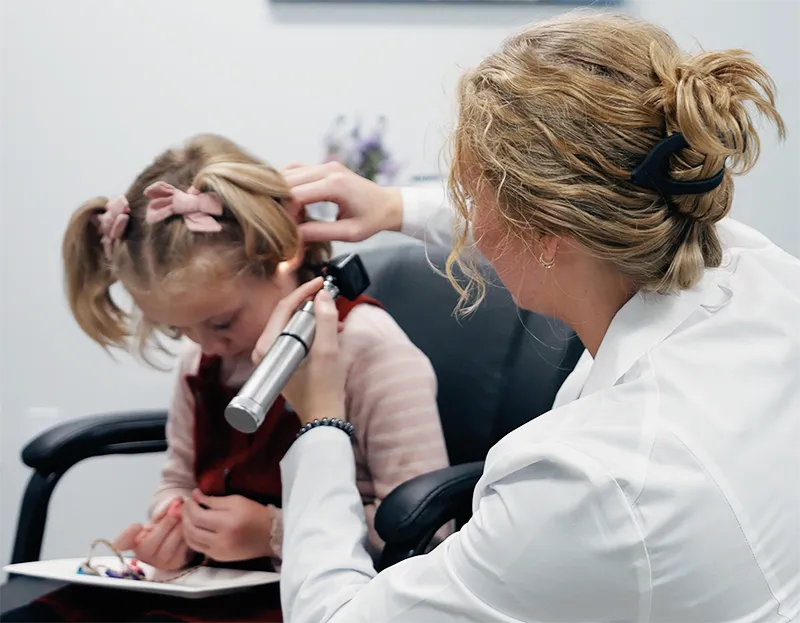
Hearing loss is rarely static. Hearing can change gradually, and the brain’s ability to process sound evolves with age, health, and cognitive factors.
Successful hearing outcomes depend on:
Hearing aids don’t restore hearing on their own. They work best when paired with ongoing care, regular adjustments, and trust between patient and provider.
In my experience, the patients who do best are those who view hearing care as a process, not a one-time purchase. Over time, that approach leads to clearer communication, greater confidence, and a better quality of life.
It’s more common than most people realize.
We routinely see patients who purchased hearing aids from Costco, Sam's Club, or other retail chains and later come to us for help
Sometimes they’re looking for a repair. Other times they simply say, “These just never worked the way I hoped,” or “They told me this was the best I could expect.”
When we evaluate those devices, we often find:
Price is often what drew them in initially. But many tell us that once they experience comprehensive audiology care, the long-term value becomes clear.
One of the biggest differences between audiology care and retail hearing aid sales is verification.
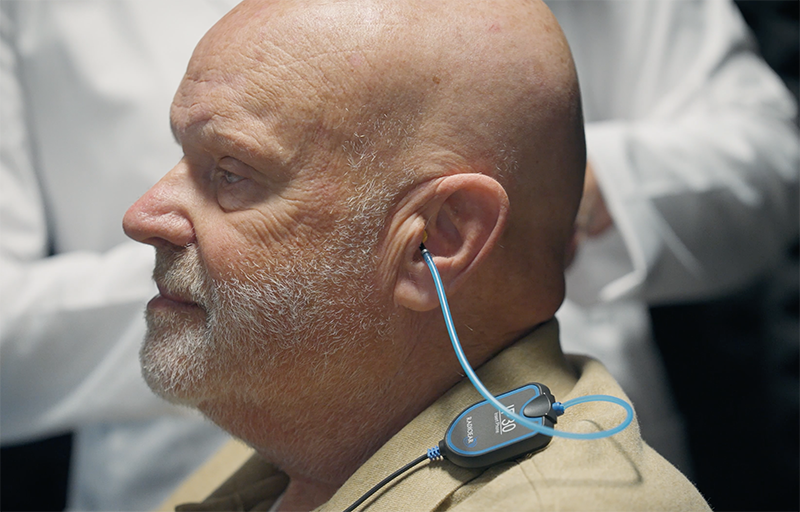
Real-Ear Measurement is considered the gold standard for hearing aid fitting. It measures how sound is actually delivered in your ear, not how a device performs in a test box or based on averages.
In my experience, patients are often surprised to learn that most retail hearing aid stores—including Costco and other big-box retailers—skip this step entirely.
Without it, there’s no objective confirmation that the hearing aids are doing what they’re supposed to do.
Numerous studies show that REM leads to better speech understanding and higher patient satisfaction, and major audiological associations consider real ear measurement the gold standard in hearing aid fittings, including
This is one of the most common questions we hear, so it deserves a direct answer.
Costco employs licensed hearing instrument specialists and, in some locations, audiologists. They offer competitive pricing on reputable hearing aid brands, and their return policy provides a safety net for customers.
However, Costco's business model prioritizes volume and efficiency over comprehensive clinical care. Based on our experience evaluating patients who started at Costco, many locations:
If you have straightforward, mild-to-moderate hearing loss, value price above all else, and don't anticipate needing ongoing clinical support, Costco may be sufficient for your needs.
Many patients choose Costco initially due to pricing and convenience, then seek comprehensive audiology care when they experience:
However, if you want:
...then a dedicated audiology practice will typically provide better outcomes. The choice isn't just about cost. It's about the level of clinical care you're receiving and whether it will lead to successful long-term hearing outcomes.

Adult children and caregivers often play a critical role in helping someone seek care.
I’ve seen many situations where a spouse or adult child researched hearing loss and read patient experiences, then gently encouraged a loved one to see an audiologist.
When caregivers understand the difference between device sales and comprehensive hearing care, they’re better equipped to guide that decision.
Many caregivers report better outcomes when their parent works with an audiologist who:
That support often leads to earlier intervention and better long-term outcomes.
If your goal is simply to buy a device, have very mild hearing loss and value convenience above all else, a hearing aid store may seem sufficient.
But if your goal is to hear better in the moments that matter, understand what’s happening with your hearing, and receive care that adapts as your needs change, an audiologist provides a level of expertise and support that a retail model can’t replicate.
An audiologist is typically the better choice if:
Choosing care is about more than buying a device. It’s about choosing a partner in your hearing health.
In most cases, no. Many patients can schedule directly with an audiologist.
Yes. Audiologists earn a Doctor of Audiology (AuD) degree and are licensed healthcare providers.
Pricing often includes professional services, follow-up care, and long-term support, not just the device itself.
Not necessarily. While initial costs may differ, comprehensive care and proper fitting often reduce long-term frustration and replacement costs.
Absolutely. Many patients seek audiology care to improve hearing aids they purchased elsewhere — including from Costco, Sam's Club, or online retailers.
We can:
Many patients who bring in hearing aids purchased elsewhere experience meaningful improvement once the devices are properly evaluated and adjusted using audiology best practices.If the devices are inadequate for your needs, we can discuss better options.
A note on fees: Most audiology practices, including ours, charge a one-time onboarding or evaluation fee when providing care for hearing aids purchased elsewhere. This fee covers the time required for comprehensive diagnostic testing, device evaluation, reprogramming, and clinical documentation.
This is standard practice in healthcare, similar to how physicians charge for evaluations and treatment even when addressing conditions diagnosed elsewhere. The fee ensures you receive the same thorough, professional care as patients who purchased their devices from us, and it reflects the clinical expertise and time required to optimize your hearing outcomes.
If you decide to upgrade to new hearing aids through our practice, this fee is often applied as a credit toward your purchase.
If you're within Costco's return window (typically 180 days), you have options:
Many patients are surprised by how much better their Costco hearing aids perform after receiving Real-Ear Measurement and proper adjustments from an audiologist. However, if the devices themselves are insufficient for your needs, we'll let you know honestly.
Either way, you deserve to hear well. Don't settle for "good enough" if you're still struggling.
Yes. Audiologists regularly collaborate with physicians to ensure complete, coordinated care.
Early care can still make a meaningful difference, especially in noisy environments or social settings.
Yes. Many audiologists specialize in vestibular and balance evaluations and work closely with other medical providers.
Hearing aids can help you hear sounds again. Comprehensive audiology care helps you hear life again – clearly, comfortably, and with confidence over time.
If you're exploring your options, the most important question isn't "Where can I buy hearing aids cheapest?" It's "Where can I receive comprehensive hearing care that leads to the best long-term outcomes?"
For most people, that answer is a dedicated audiology practice.
If you're experiencing hearing difficulty, schedule a comprehensive evaluation with a doctor of audiology. If you live in Maryland, Virginia, Pennsylvania, or New Jersey, one of our doctors of audiology or hearing specialists would be happy to see you, and you can schedule an appointment at one of our clinics. The difference in outcomes is worth the investment.
Medical Disclaimer: This article is for informational purposes only and does not constitute medical advice. Consult with a licensed audiologist or physician for personalized hearing healthcare recommendations tailored to your individual needs.